
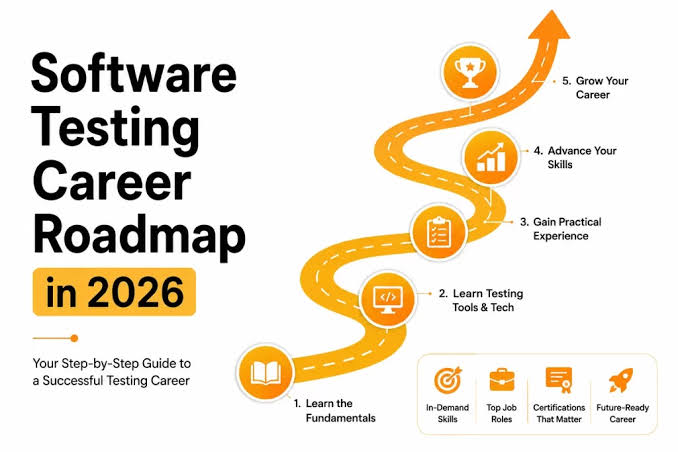

IT Career Roadmap (2026 Guide): A Complete Guide for Students & Freshers
The Information Technology (IT) industry continues to be one of the fastest-growing and highest-paying career sectors in the world. From software development and artificial intelligence to cybersecurity and cloud computing, IT offers countless opportunities for students and professionals.
If you’re wondering how to start a career in IT in 2026, this guide will help you understand the skills, career paths, certifications, and job opportunities available.
Whether you’re a school student, college graduate, or someone planning a career switch, this roadmap will help you choose the right direction.
IT Career Roadmap Overview
| Stage | What to Do |
|---|---|
| Step 1 | Choose Your IT Career Path |
| Step 2 | Learn Programming Fundamentals |
| Step 3 | Master Essential Technical Skills |
| Step 4 | Build Real Projects |
| Step 5 | Earn Industry Certifications |
| Step 6 | Create a Strong Portfolio |
| Step 7 | Apply for Internships |
| Step 8 | Prepare for Interviews |
| Step 9 | Get Your First IT Job |
| Step 10 | Continue Learning & Upskilling |
Why Choose an IT Career in 2026?
The demand for skilled IT professionals is expected to grow significantly due to advancements in:
- Artificial Intelligence (AI)
- Machine Learning (ML)
- Cloud Computing
- Cybersecurity
- Data Science
- Blockchain
- Internet of Things (IoT)
- DevOps
- Full Stack Development
Benefits of an IT Career
- High salary packages
- Remote work opportunities
- Global career options
- Continuous learning
- Strong job security
- Diverse career paths
Step 1: Choose Your Career Path
The IT industry offers multiple career options.
| Career Path | Suitable For |
|---|---|
| Software Developer | Coding Enthusiasts |
| Web Developer | Website Development |
| Mobile App Developer | Android & iOS Apps |
| Data Scientist | Data Analysis |
| AI & Machine Learning Engineer | Artificial Intelligence |
| Cybersecurity Analyst | Security Professionals |
| Cloud Engineer | AWS, Azure, Google Cloud |
| DevOps Engineer | Automation & Deployment |
| UI/UX Designer | Creative Professionals |
| QA/Test Engineer | Software Testing |
Step 2: Learn Programming Languages
Programming is the foundation of most IT careers.
Recommended Programming Languages
| Language | Best For |
|---|---|
| Python | AI, ML, Automation, Data Science |
| Java | Enterprise Applications |
| JavaScript | Web Development |
| C++ | Competitive Programming |
| C | Programming Fundamentals |
| SQL | Database Management |
| PHP | Backend Development |
| Kotlin | Android Development |
| Swift | iOS Development |
Step 3: Learn Core Computer Science Concepts
Strong fundamentals make learning advanced technologies easier.
Topics to master:
- Data Structures
- Algorithms
- Object-Oriented Programming (OOP)
- Database Management Systems (DBMS)
- Computer Networks
- Operating Systems
- Software Engineering
- Git & GitHub
Step 4: Select a Specialization
Choose one field based on your interests.
1. Full Stack Development
Learn:
- HTML
- CSS
- JavaScript
- React
- Node.js
- Express.js
- MongoDB
Career Roles
- Frontend Developer
- Backend Developer
- Full Stack Developer
2. Data Science
Learn:
- Python
- Statistics
- Pandas
- NumPy
- SQL
- Power BI
- Tableau
Career Roles:
- Data Analyst
- Data Scientist
- Business Analyst
3. Artificial Intelligence & Machine Learning
Learn:
- Python
- Machine Learning
- Deep Learning
- TensorFlow
- PyTorch
Career Roles:
- AI Engineer
- ML Engineer
- NLP Engineer
4. Cybersecurity
Learn:
- Ethical Hacking
- Network Security
- Linux
- Penetration Testing
- SIEM Tools
Career Roles:
- Security Analyst
- Ethical Hacker
- Security Engineer
5. Cloud Computing
Learn:
- AWS
- Microsoft Azure
- Google Cloud
- Docker
- Kubernetes
Career Roles:
- Cloud Engineer
- Solutions Architect
- DevOps Engineer
Step 5: Build Projects
Employers value practical experience.
Ideas include:
- Personal Portfolio Website
- E-commerce Website
- Weather App
- Chat Application
- Task Management App
- AI Chatbot
- Expense Tracker
- Online Quiz System
Step 6: Earn Certifications
Industry-recognized certifications can strengthen your resume.
| Certification | Provider |
|---|---|
| AWS Cloud Practitioner | Amazon Web Services |
| Microsoft Azure Fundamentals | Microsoft |
| Google Cloud Digital Leader | |
| CompTIA Security+ | CompTIA |
| Cisco CCNA | Cisco |
| Oracle Java Certification | Oracle |
| Meta Front-End Developer | Meta |
| Google Data Analytics |
Step 7: Create a Strong Portfolio
Include:
- GitHub Projects
- Resume
- LinkedIn Profile
- Personal Website
- Internship Experience
- Certifications
A strong portfolio showcases your practical skills to employers.
Step 8: Gain Practical Experience
Before applying for full-time jobs, try to gain hands-on experience through:
- Internships
- Freelancing
- Open Source Contributions
- Hackathons
- College Projects
Step 9: Prepare for IT Interviews
Focus on:
- Programming Questions
- DSA Problems
- SQL Queries
- Aptitude Tests
- System Design (for experienced roles)
- HR Interview Questions
Practice coding regularly on platforms like LeetCode, HackerRank, and CodeChef.
Step 10: Apply for Jobs
Popular job portals include:
- LinkedIn Jobs
- Naukri.com
- Indeed
- Internshala
- Wellfound (AngelList)
Customize your resume for each application and highlight relevant skills and projects.
Highest Paying IT Careers in 2026
| Job Role | Average Salary (India) |
|---|---|
| AI Engineer | ₹10–25 LPA |
| Data Scientist | ₹8–20 LPA |
| Cloud Engineer | ₹8–18 LPA |
| DevOps Engineer | ₹8–20 LPA |
| Cybersecurity Analyst | ₹6–15 LPA |
| Full Stack Developer | ₹6–18 LPA |
| Software Engineer | ₹5–15 LPA |
| Mobile App Developer | ₹5–14 LPA |
| UI/UX Designer | ₹5–12 LPA |
| QA Engineer | ₹4–10 LPA |
Note: Salaries vary based on experience, company, location, and skills.
Common Mistakes to Avoid
- Learning too many technologies at once
- Ignoring programming fundamentals
- Not building real-world projects
- Avoiding internships
- Not practicing coding regularly
- Neglecting communication skills
- Skipping version control (Git)
- Applying without a strong resume
IT Career Roadmap Timeline
| Time | Goal |
|---|---|
| Month 1–2 | Learn Programming Basics |
| Month 3–4 | Study DSA & Databases |
| Month 5–6 | Choose a Specialization |
| Month 7–8 | Build Projects |
| Month 9 | Earn Certifications |
| Month 10 | Create Portfolio |
| Month 11 | Apply for Internships |
| Month 12 | Start Job Applications |
Final Thoughts
The IT industry in 2026 offers exciting opportunities across software development, AI, cloud computing, cybersecurity, data science, and many other domains. Success in IT is not just about earning a degree—it’s about continuously learning, building projects, gaining practical experience, and staying updated with the latest technologies.
Start with strong fundamentals, choose a specialization that matches your interests, and keep improving your skills. With dedication and consistent effort, you can build a successful and rewarding career in the IT industry.
Frequently Asked Questions (FAQs)
What is the best IT career in 2026?
AI Engineer, Data Scientist, Cloud Engineer, Cybersecurity Analyst, and Full Stack Developer are among the top IT careers in 2026.
Which programming language should I learn first?
Python is beginner-friendly and widely used, while JavaScript is essential for web development.
Can I start an IT career without a Computer Science degree?
Yes. Many companies hire candidates based on skills, certifications, projects, and practical experience.
How long does it take to become job-ready in IT?
With consistent learning and project work, many beginners become job-ready within 6–12 months.
Are IT certifications important?
Yes. Certifications from AWS, Microsoft, Google, Cisco, and CompTIA can improve your resume and validate your skills.
Which IT field has the highest salary?
Artificial Intelligence, Machine Learning, Cloud Computing, Cybersecurity, and Data Science are among the highest-paying IT domains.
Do I need coding skills for every IT career?
No. While coding is important for many roles, careers like UI/UX Design, IT Support, Business Analysis, and some Cloud or Project Management roles require minimal coding.Online IT Courses for Beginners